
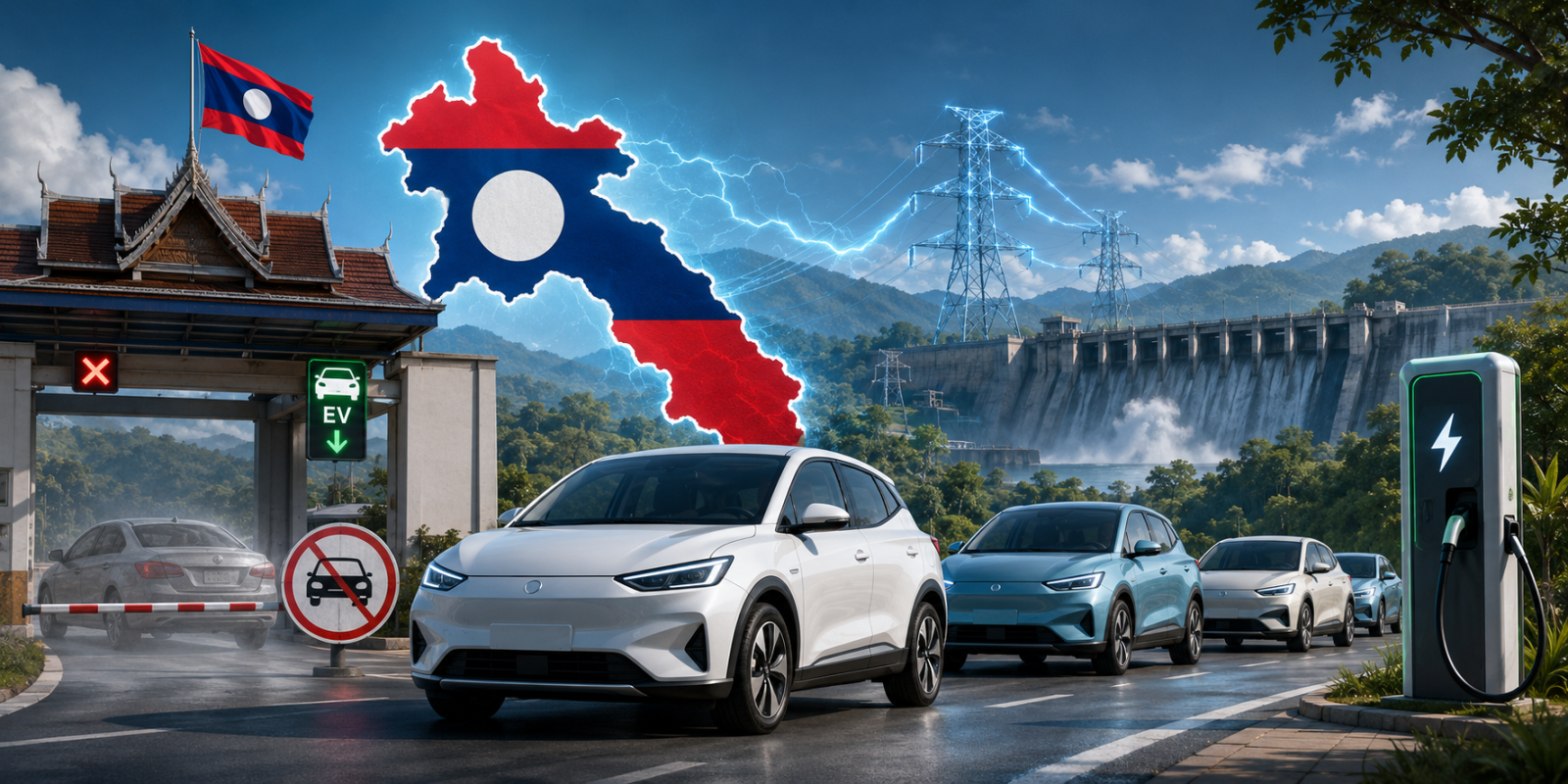
Laos did something no other country has tried: it banned the import of new gas and diesel passenger cars outright. As of June 1, nearly every new car cleared for import has to be electric.
It’s the most aggressive EV mandate on the planet right now, and it has almost nothing to do with consumer demand.
The Lao government suspended imports of petrol- and diesel-powered vehicles effective June 1, 2026, with the ban running through the end of the year. The Ministry of Industry and Commerce is handling implementation. With combustion imports frozen, the only new cars legally entering the country are electric. Hence the “100%” electric import figure in June.
But there’s a catch. Actually, several.
The ban isn’t total. Public transport vehicles, construction machinery, project-related trucks, and other specialized vehicles are exempt. Diesel keeps flowing where the country can’t yet electrify. This is a passenger-car policy, aimed squarely at the segment where affordable electric alternatives already exist.
Why a landlocked country of 7 million is going this hard
Laos isn’t doing this for climate headlines. The logic is economic.
The country runs almost entirely on hydropower and has built its export strategy around selling electricity to its neighbors. But it imports every drop of the fuel its cars burn, and that fuel bill is paid in foreign currency Laos is chronically short on. Every gas car swapped for an electric one runs on domestic hydro instead of imported diesel. That’s the whole game.
To push buyers toward EVs, Laos is pairing the stick with carrots. Fully electric vehicles priced under $50,000 get a full excise tax exemption. The government cut EV registration fees. And it’s requiring transportation companies to run at least 10% electric fleets by the end of 2026.
There’s an infrastructure push behind it too. In April, Laos signed an agreement with 27 public and private partners to build out charging stations, battery-swapping stations, a central digital platform, and financing products. The national target is 30% of vehicles electric by 2030.
China fills the vacuum
The space left by combustion cars is being filled almost entirely by China. As we reported in June, Chinese EV exports to ASEAN hit $1.2 billion in a single month, with Laos posting record volumes alongside Cambodia. Chinese brands and Vietnam’s VinFast, through its Xanh SM taxi platform, already have footholds in the market.
A ban on gas imports is, in practice, a subsidy for whoever sells cheap EVs — and right now that’s Chinese automakers.
Laos is an outlier, but the direction isn’t. Global EV sales hit 2 million in June, Europe just posted a record battery-electric month, and China’s electric heavy trucks crossed 50% penetration. Cambodia scrapped customs duties on EVs earlier this year. Across Southeast Asia, governments are treating electrification as energy security, not a green talking point.
Electrek’s Take
The headline writes itself. A country went nearly 100% EV overnight. But the mechanism matters, and it’s worth being clear-eyed about it.
Top comment by Jack
While this is a drastic example, any country that imports most of its oil and does not have a domestic vehicle manufacturing footprint to meddle in politics should be thinking of ways to move in this direction. Oil prices are back up around $90 per barrel today. While they could drop back down any time, why stay on this roller coaster if you don't have to?
Laos didn’t win over car buyers. It removed the alternative. That’s a very different thing from what’s happening in Norway or even China, where EVs are winning on price, performance, and choice. A ban works on paper, but it only holds if people can actually buy and charge the electric cars that are left. In a country where charging is thin and incomes are low, that’s a real question, and the exemptions for trucks and machinery show the government knows it can’t flip everything at once.
Still, don’t dismiss it. This is what energy-security-driven electrification looks like when a country has cheap domestic power and an expensive fuel-import bill. Laos is a small market, but it’s a preview of the math a lot of oil-importing nations are about to run. When your electricity is homegrown hydro and your gasoline is bought in scarce dollars, banning the gas car stops being radical and starts looking like arithmetic.
The open question is whether the charging network and the cars can keep the promise this decree just made. We’ll be watching the back half of 2026 to find out.
If you’re buying an EV, powering it with home solar can cut your fuel costs to nearly zero. With electricity rates up almost 10% last year and expected to keep climbing, going solar is one of the best ways to protect yourself against rising costs. And with lease and PPA options, you can do it with zero upfront cost and start saving immediately. If you want to find the best deal, check out EnergySage. It’s a free service with hundreds of pre-vetted installers competing for your business, so you save 20 to 30% compared to going it alone. No sales calls until you pick an installer. Get your free quotes here.


FTC: We use income earning auto affiliate links. More.



Comments